
Casework

CASEWORK
“The employer might know much more than the worker. Our guidance puts [workers] in a much fairer position – this is my responsibility.” – Alfiyan, TWC2 Lead Case Officer
Migrant workers come to Singapore to pursue a better life. When they encounter abusive employers or workplace injuries, most of them are unprepared. Many are afraid to go directly to the authorities, and are unclear about their rights, or what avenues of help are available.
TWC2’s caseworkers level the playing field, when no one else is on the worker’s side. To have somebody give prompt and helpful answers makes a huge difference to workers. We advise them what they are entitled to under the law, we explain the remedy process available to them, and help them anticipate the next steps or the timeline when seeking redress.
At the same time, we make sure to respect their agency and autonomy. It is their decision on how they wish to proceed, and our casework team calibrates our assistance according to the worker’s needs.
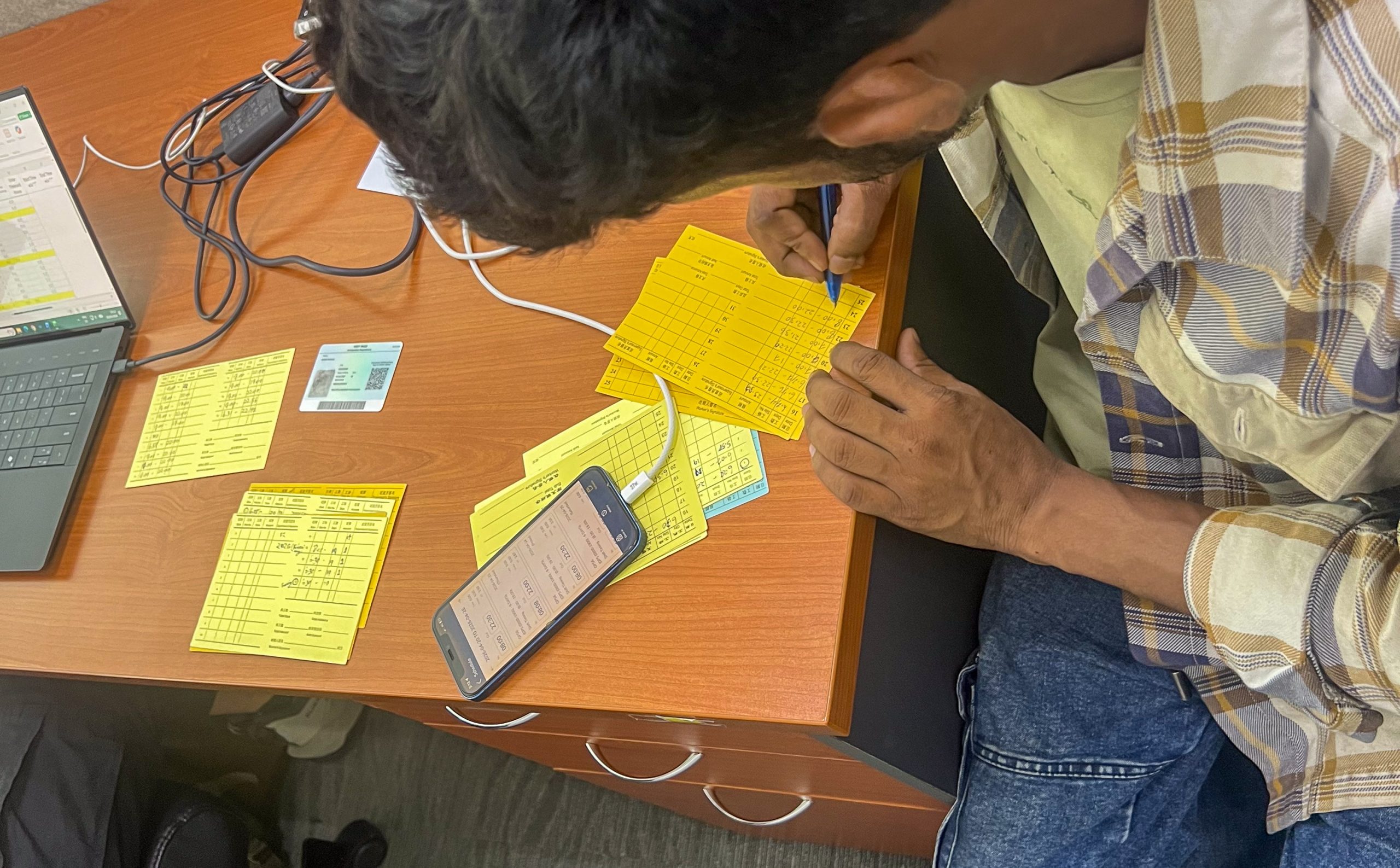
A construction worker assembles evidence on his work hours for a salary claim.
Read on for details of the assistance we provide and some examples of cases we see.
Casework – more details
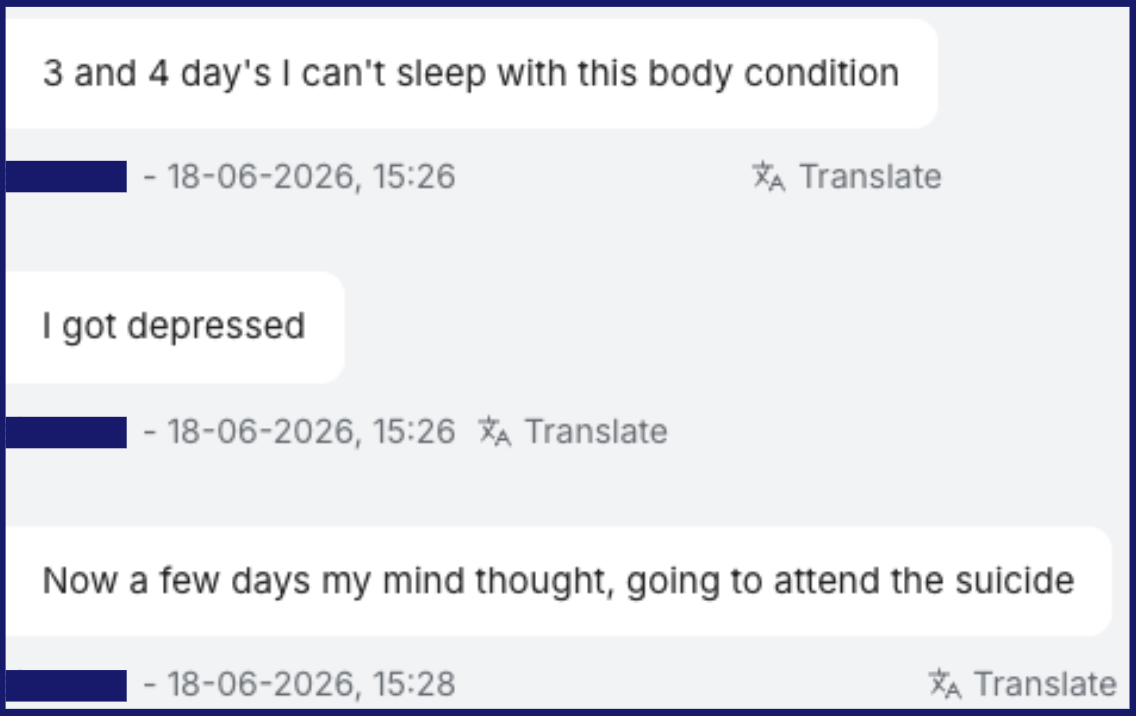
Workers walk-in to our Bencoolen and Farrer Park locations to seek advice. They also contact us via our online helpdesk, which we started when many workers moved to remote dormitories during and after Covid.
In 2025 alone, we received 214.8k messages on our online helpdesk.
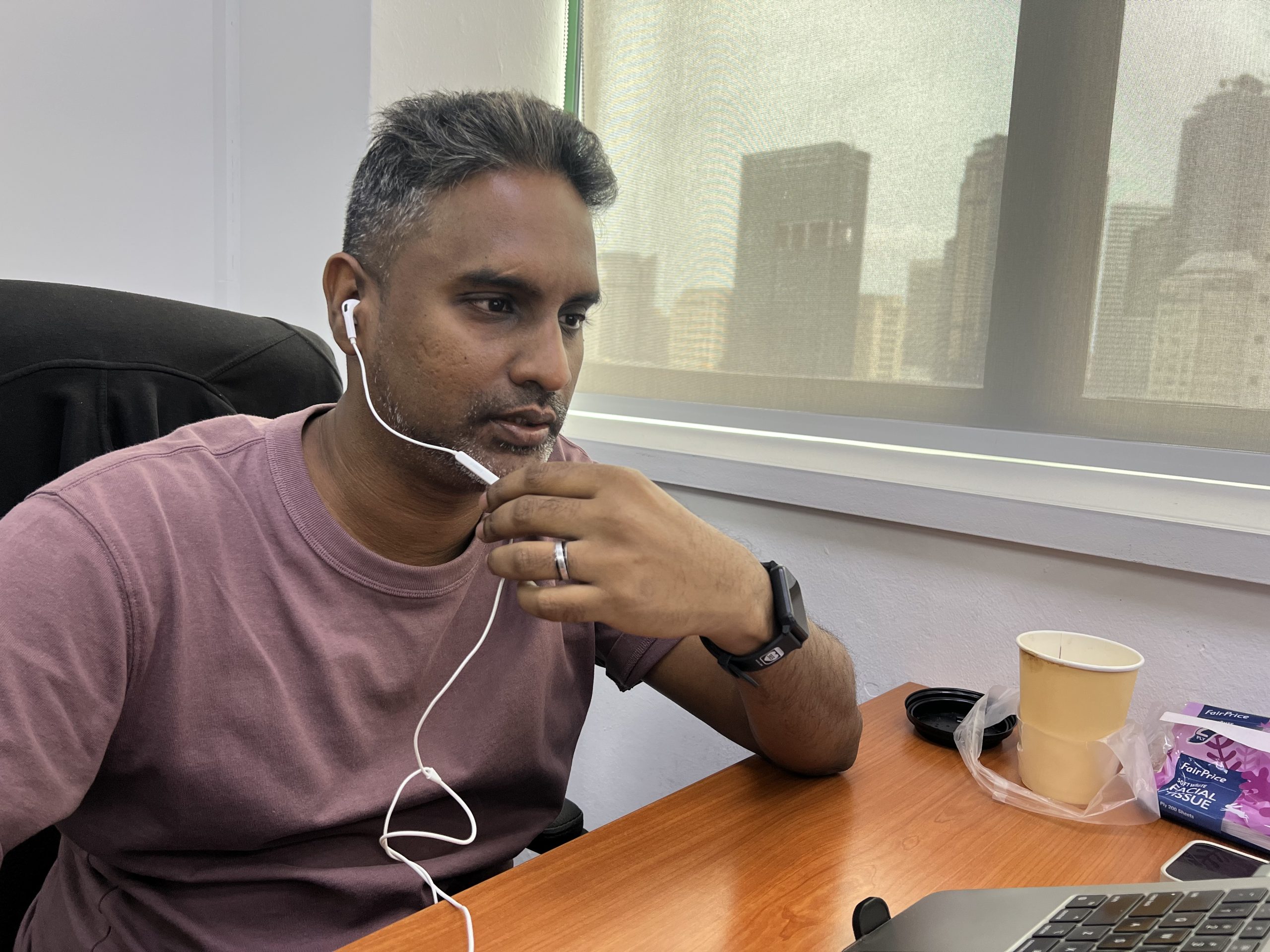
During this first discussion, we get an overview of the problems the client is facing, and explain the options available to them. If the case is such that they may need the help of another agency, we tell them where to go. Typically, the client wants to think about their options first, or is able to go to that other agency on their own to seek help.


Upon understanding the case, we extend assistance in many forms, including:
- Writing emails to other agencies on their behalf;
- Accompanying them to the hospital or to the police station;
- Signing them up for our free meals programme (TCRP);
- Helping to pay for medical or dental treatment;
- Providing transport or phone topups so they can take the bus to go to hospital, or stay in contact with their family.
Generally, intervention is resource-sensitive. Money, time, and the availability of volunteers set limits on what we can do.
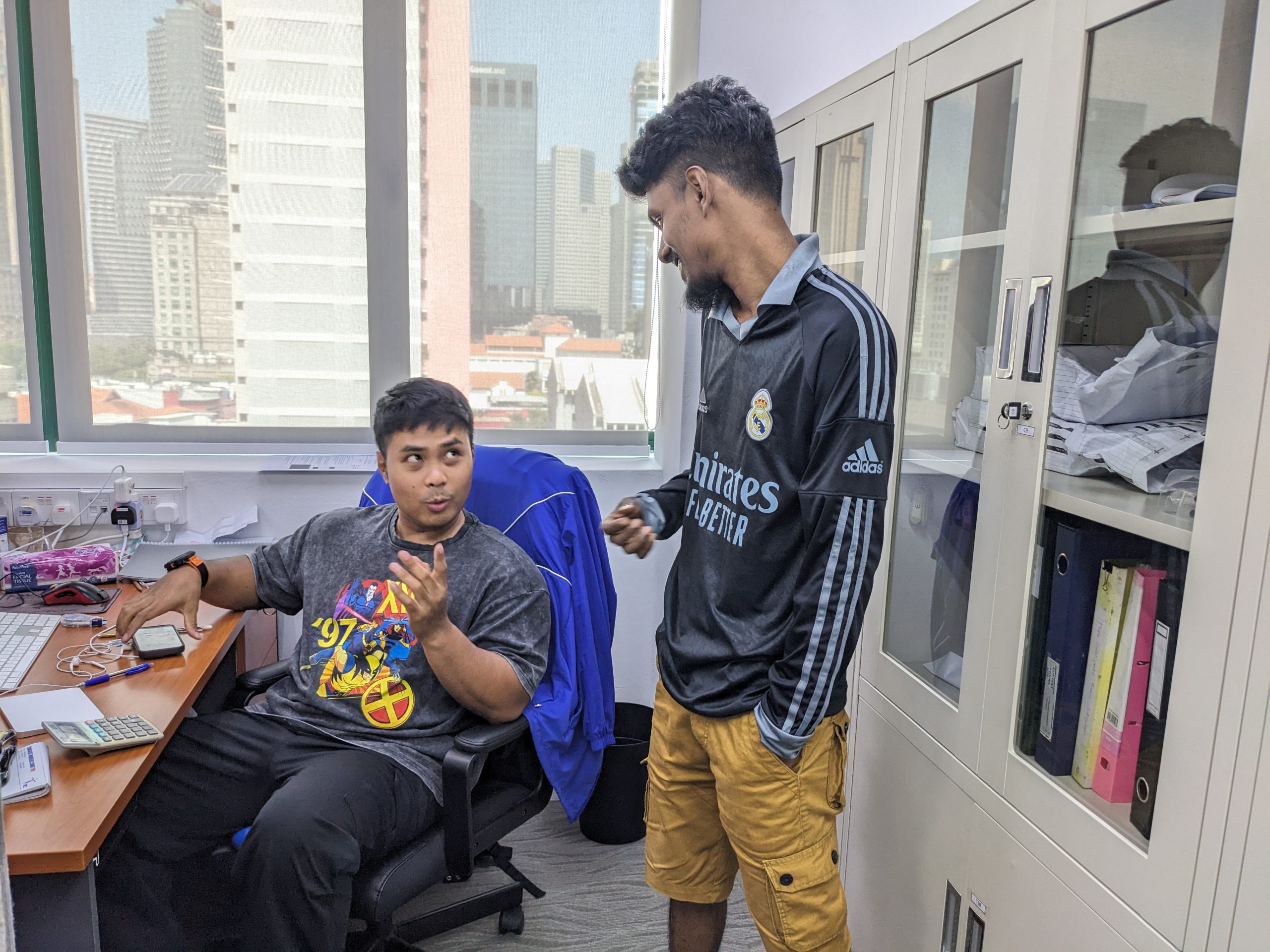
In recent years, the number of workers we help has increased and the range of problems has grown.
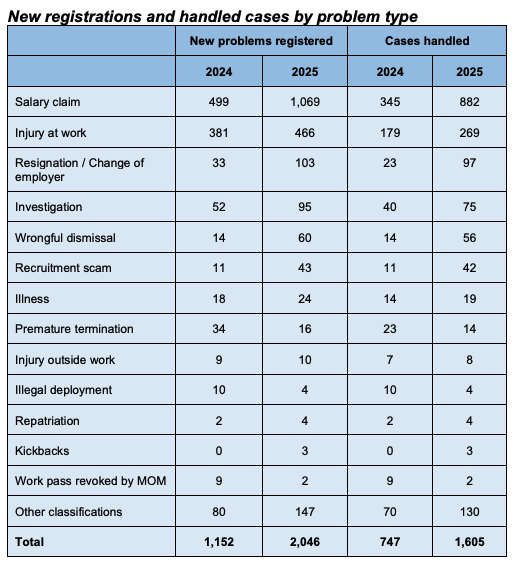
Most workers come to TWC2 for help with their salary disputes. We advise them of their rights, help them to calculate the amount owed, compile the evidence needed to press their case, and follow up on each stage of the claim process.
Workplace injuries are the second biggest category of cases we help with. Workers come to us when their employers attempt to delay or deny medical treatment, or when they are unsure about their entitlements under the Workplace Insurance Compensation Act (WICA). We help to communicate with doctors to better understand the prognosis or needed treatment, and explain the same to workers. We also remain there for the patient when they undergo surgery or rehabilitation.
Examples
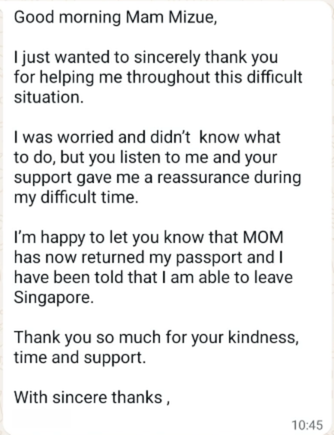
Ugen (name changed) had been trapped in Singapore for 3 long years because of an FMMD investigation. He was left in prolonged uncertainty, receiving no further updates on the status or progress of his case, while his passport was detained. His mental wellbeing deteriorated over time. Desperate to move on with his life, he contacted TWC2. With our help, his passport was swiftly returned, and he was free to return home.
17211
“It was with the help of TWC2 that we collected all the proof and put it together and presented my case to the court and finally won it.”
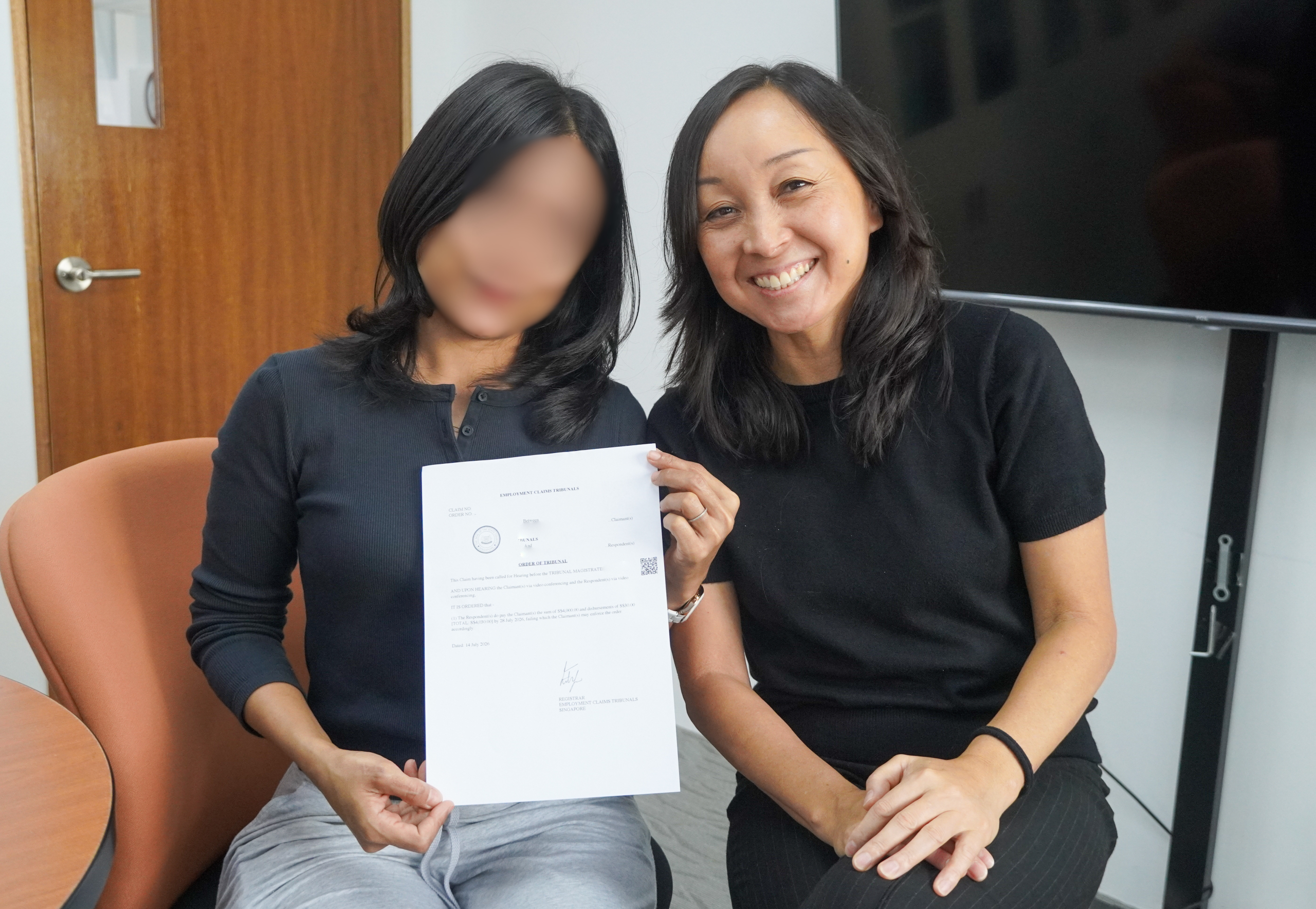
Ridouan (name changed) came to Singapore to work as a cook. For two years, he worked extraordinary hours from 5am – 9pm, 7 days a week. He tells us that he was also made to give his boss kickbacks: $500 in cash each month, totalling $12,000. With TWC2’s help, he filed a salary claim and won a Tribunal order for $20,000 in owed wages against his boss.
Read about the judgement, or his full story here.

17211
“If I went to MOM by myself, I would have no idea, and no evidence. TWC2 taught me how to walk, and talk in front of the court. Everything that TWC2 did helped me to win the case.”
Su Myat arrived in Singapore to work as a cook, but was illegally deployed to do housekeeping jobs. After seven long months, she won her wrongful dismissal claim at the Employment Claims Tribunal.
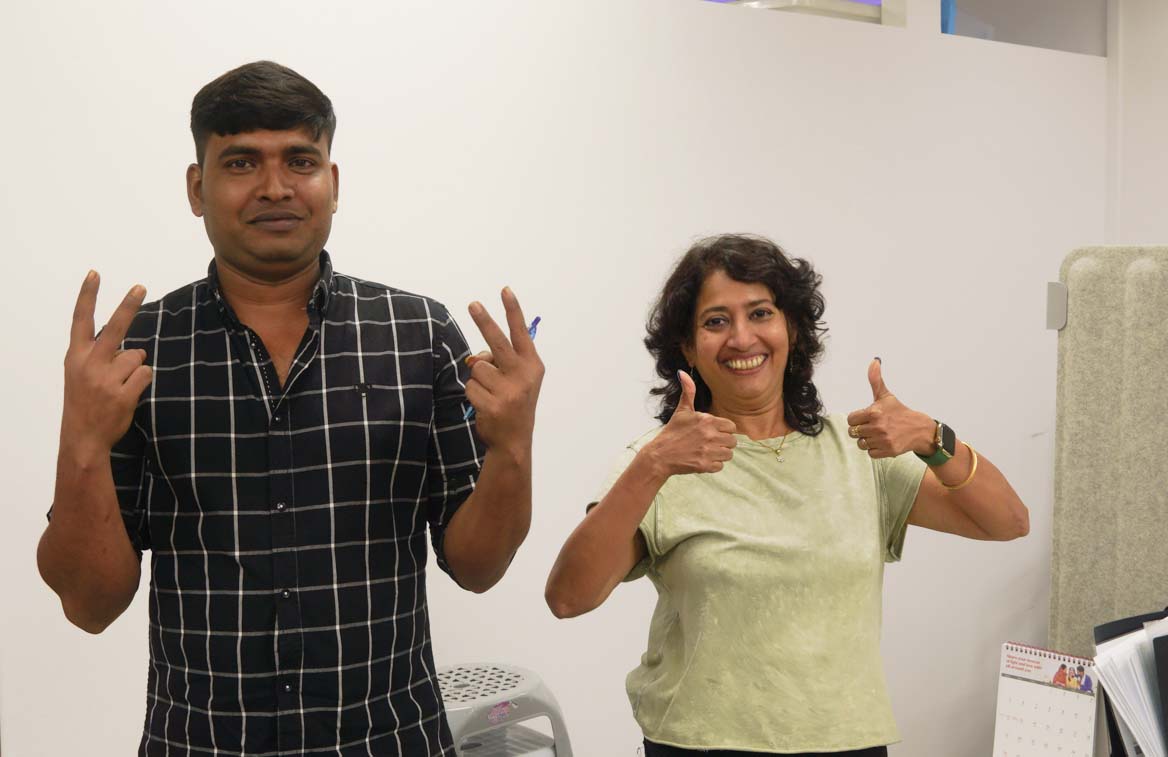
“TWC2 explained the situation really well to me even though I can’t speak or understand English, and provided me with Hindi translations. Because of their help, I was able to return home and win my case. Along with my family, we thank TWC2 from our hearts.”
Gena Hulash Ram was owed $5,711 for 9 months of overtime as a vegetable packer. After 2 years of legal work, he won at the High Court with our help to appeal the Tribunal Order. The ruling was significant, because it signalled a strict application of the Employment Act and relevant rules. This serves to protect vulnerable migrant workers, and will become a clear reference for all subsequent salary claims.

14712
Than Lwin (name changed) came from Myanmar to work at a popular bakery chain in Singapore. Unlike his colleagues, he did not get fixed days off, and was also not compensated for work on public holidays. He was also not paid properly for overtime work.
He was initially told that he did not have much grounds to claim for overtime pay. But with TWC2’s guidance, he assembled a solid claim and eventually reached a settlement that he was happy with.
15411
Nazmul came to Singapore from Bangladesh in Jan 2023, and worked as the cook at a canteen stall in a Punggol dormitory. He did everything from cutting vegetables, to cooking to washing dishes for 12 hours a day, 7 days a week.
With little direct evidence to support his case, and without much education, he had to represent himself in court-like proceedings conducted in English. TWC2 guided him through a long and challenging claim process, and he was eventually awarded $13,677 in owed salary.
14299