Access to healthcare

ACCESS TO HEALTHCARE

“Boss asked me to pay [for my treatment]. I say, ‘How I give you money? I no have money.’ Boss angry.” – Migrant worker (name redacted) 

TWC2’s advocacy on migrant worker healthcare is aimed at ensuring that all migrant workers can seek timely and affordable care, without fear or delay. We document patterns of unmet medical need, and spotlight the systemic barriers that workers face. By gathering evidence and identifying practical solutions, we engage healthcare workers and policymakers on this issue to ensure that the most vulnerable groups in our society will be cared for.
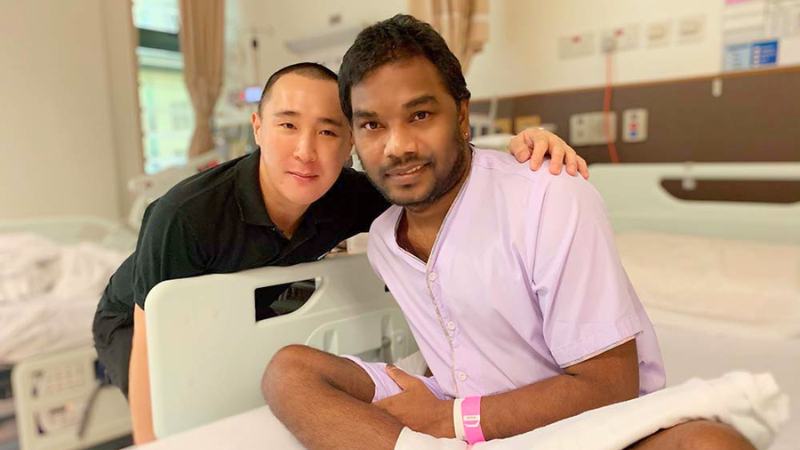
Ethan Guo, TWC2 Executive Director, visiting a worker in the hospital while he recovers from long-Covid.

Background on migrant worker healthcare

For low-wage migrant workers, employers play a central role in arranging access to healthcare.

Primary care: Under the Employment of Foreign Manpower Act (EFMA) and its subsidiary regulations, employers must bear responsibility for workers’ medical treatment, and purchase the necessary medical insurance. In 2022, MOM launched the Primary Care Plan (PCP) to make polyclinic and GP visits affordable for Work Permit holders living in dormitories.

Workplace injuries: The Work Injury Compensation Act (WICA), which replaced the Workmen’s Compensation Act in 2008, ensures that migrant workers can receive medical treatment and income support for work-related injuries.

Instead of requiring legal representation, workers can make claims for work-related injuries through this no-fault system. The Act has been strengthened over time, with increases in the compensation limits and minimum coverage amounts. In 2019, the WICA system was overhauled so that insurance companies are now in charge of processing WICA claims, amongst other changes.

We often see workers afraid or unable to seek the care they need because of a power imbalance between worker and employer, fear of retaliation, or administrative delays. Beyond advocating for individual workers in the healthcare system, TWC2 identifies the systemic gaps that leave workers in this position of vulnerability, and pushes for fairer policies.

Click on the following tabs for our key findings and recommendations on healthcare for migrant workers, as well as progress made over the years:

Need title

From crushed limbs to permanent disabilities, workplace injuries can often be devastating for migrant workers, and delays in treatment can have severe consequences. Yet, we often see workers who are pressured to return home without treatment, or left in limbo during lengthy insurance processes.

TWC2 calls for a WICA system where (1) workers are allowed to access their insurance policies directly, (2) insurance companies have regulated deadlines on how long their processes take, and (3) injured workers are paid their MC wages in a timely manner.

  • 2024: TWC2 evaluates and highlights gaps in post-2019 WICA
  • 2024: TWC2 highlights delays in MC wages
  • 2019: TWC2 press comments on new WICA law
  • 2019: TWC2 comments on proposed WICA amendments
  • 2019: TWC2 comments on changes in WICA validity investigation
  • 2018: TWC2 report tracks long waits for WICA compensation
  • 2018: TWC2 recommends mandatory reporting of injuries by healthcare industry
  • 2018: TWC2 statement on mental health of injured workers
  • 2017: TWC2 x SMU report on labour protections required for injured workers
  • 2017: TWC2 press commentary on workplace safety
  • 2016: TWC2 papers on gaps in WICA: here and here
  • 2014: TWC2 op-ed on allowing workers to work while awaiting WICA resolution
  • 2014: TWC2 paper consolidates WICA recommendations
  • 2013: TWC2 speaks up for workers in public conversation about MW injuries
  • 2013: TWC2 spotlights unfair costs born by injured workers
  • 2013: TWC2 survey shows workers denied sick leave
  • 2013: TWC2 highlights lax enforcement of MC wages
  • 2012: TWC2 press letter on employer bias in MOM’s WICA policies
  • 2012: TWC2 highlights gaps in WICA enforcement
  • 2012: TWC2 highlights gap in MW medical care system
  • 2011: TWC2 documents vulnerability of injured worker

TWC2’s stance on medical subsidies is that migrant workers are unfairly excluded from Singapore’s subsidised healthcare system, despite being amongst those least able to afford high medical costs.

In 2007, government subsidies to foreigners were removed, placing responsibility on employers to pay for care, typically through insurance. This indirectly restricts workers’ access to healthcare because employers would prefer to deny the occurrence of an accident or injury than risk incurring costs beyond the insurance coverage, or facing increased insurance premiums. We continue to document the consequences of such a system, and call for low-wage migrant workers to receive subsidised healthcare.

Read our full statement on this topic.

Read our recent case studies:

Migrant workers rely on doctors and medical institutions not just for treatment, but also for documentation that protects their rights to rest and compensation (such as medical certificates, test results, and assessment reports). However, we have seen cases where medical decisions are influenced by employers, or where professional standards fall short. When this happens, workers may be pressured to return to work too early, or left without the documentation needed to support their claims.

TWC2 has consistently highlighted the need for medical professionals to act independently and in the best interests of their patients. We are particularly concerned about the issuance of (1) medical certificates and (2) light duty. We work with the Singapore Medical Council to hold our healthcare colleagues accountable, to ensure that workers receive appropriate medical leave, and are not disadvantaged by employer interference. Read our recent advocacy work below.

  • 2026: Broken ankle, but no medical leave
  • 2023: After a worker is hurt, mirage of a supportive employer
  • 2018: TWC2 forum letter on MC and light duty

Since the launch of the Primary Care Plan (PCP) in 2022, doctor visits for minor ailments have become much more accessible and affordable for migrant workers living in dormitories.

However, gaps remain for workers outside the scheme, and for workers who fear retaliation or salary deductions when accessing care. TWC2 continues to document these vulnerabilities and advocate for a system where workers can seek primary healthcare independently, without fear of retaliation.

Migrant workers, especially those in construction and other outdoor sectors, are disproportionately exposed to environmental risks. These conditions can have serious health consequences, but without clear and enforceable rules, workers are unable to resist working even when conditions are unsafe.

TWC2 has long advocated for stronger protections, including mandatory stop-work orders when environmental conditions reach dangerous levels. We continue to push for policies that prioritise worker safety in the face of climate-related risks, ensuring that no worker has to choose between their health and their livelihood.

  • 2025: TWC2 report on workers’ vulnerability during extreme weather events 
  • 2019: Stop-work orders needed for outdoor workers in haze conditions
  • 2016: Stop-work orders for safety violation ensure workers don’t end up paying the price
  • 2015: TWC2 urges stop-work orders when haze PSI crosses 200
  • 2013: TWC2 media statement on mandatory stop-work order

When things go wrong for workers in the CMP industries, workers can sustain major injuries: crushed limbs, loss of vision, or fractured bones. Delays in treatment could have permanent repercussions on their quality of life.
