
All Articles

The runaway
Hanis came to Singapore in August 2009 from East Java for a job as a domestic worker. Like so many others, she hoped to make enough to help support her husband and two children -- a four-year-old son and a daughter aged 11, whom she left in the care

Three videos: Inside look at migrant worker housing
There are many stories about migrant workers being housed worse than animals, in unsafe and unhygienic conditions. But it is hard to grasp how bad things can be without the visual image. With phone cameras becoming ubiquitous, these images are coming out. The first is a video first posted on

P.E. teacher learns Bengali as she helps workers
Avelyn (seated, centre) hands out a meal coupon By Ramesh “You’ll get more than you give,” says Avelyn Wei, a 24-year-old St Joseph’s Convent physical education teacher, on being a volunteer at TWC2’s Cuff Road Food Programme. “I’m not trying to romanticise what I do, but my eight
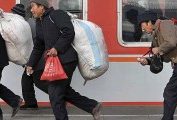
Hired on sufferance: China’s migrant workers in Singapore
This is a report published on China Labour Bulletin on February 10, 2011, compiled by Aris Chan. It calls on the Singapore government to abolish its employer-sponsored work visa policy, which gives employers excessive power and control over foreign workers --- Hired on Sufferance: China's migrant workers in Singapore There

Making merry
Merry Maids from NJCPW075 on Vimeo. By KS Touched by the plight of foreign domestic helpers, a group of teenagers from the National Junior College decided to produce an animation video related to this issue. “Merry maids”, a two-minute video, was an idea suggested by group mate, Serena Khoo, who

Manpower ministry’s Tan Chuan-Jin visits TWC2
Senior officials from the Ministry of Manpower (MOM) met with Transient Workers Count Too this week on a fact-finding visit, engaging in fruitful and cordial discussions that broached a range of legal and workplace issues faced by low-skilled migrant workers in Singapore. Led by Minister of State for Manpower Tan

Fact sheet: Workmen’s compensation for traffic accidents
The scope of the Workmen's Injury Compensation Act includes death and injury sustained while travelling in employer-provided vehicles, but not in public-transport vehicles. Section 3, subsection 2 of the Act expressly says: 3 (2) An accident happening to an employee while he is, with the express or implied permission of his

Ganging Up
By Ramesh Companies are using gangsters to intimidate, threaten and to ultimately send ‘troublesome’ workers home. Ali (not his real name) has seen better days. He wanders the labyrinthine alleys of Little India in search of friends and familiar faces. On some days all he needs are a warm wave

Two who remain inside
Up till then, it was a quiet morning at TWC2's office. Up till when the phone rang. On the other side was a woman whose voice told of deep concern. Mrs K (not her real name) told TWC2 staff member Mansura that there was a domestic worker in an apartment

Indonesian workers’ journey in photographs
"Oh yes, and the prints you see here are for sale," Sim Chi Yin said, almost as an afterthought to the speech she had just made, launching her book The Long Road Home, "and the proceeds will benefit Transient Workers Count Too, Home and Migrant Voices in equal thirds." She