
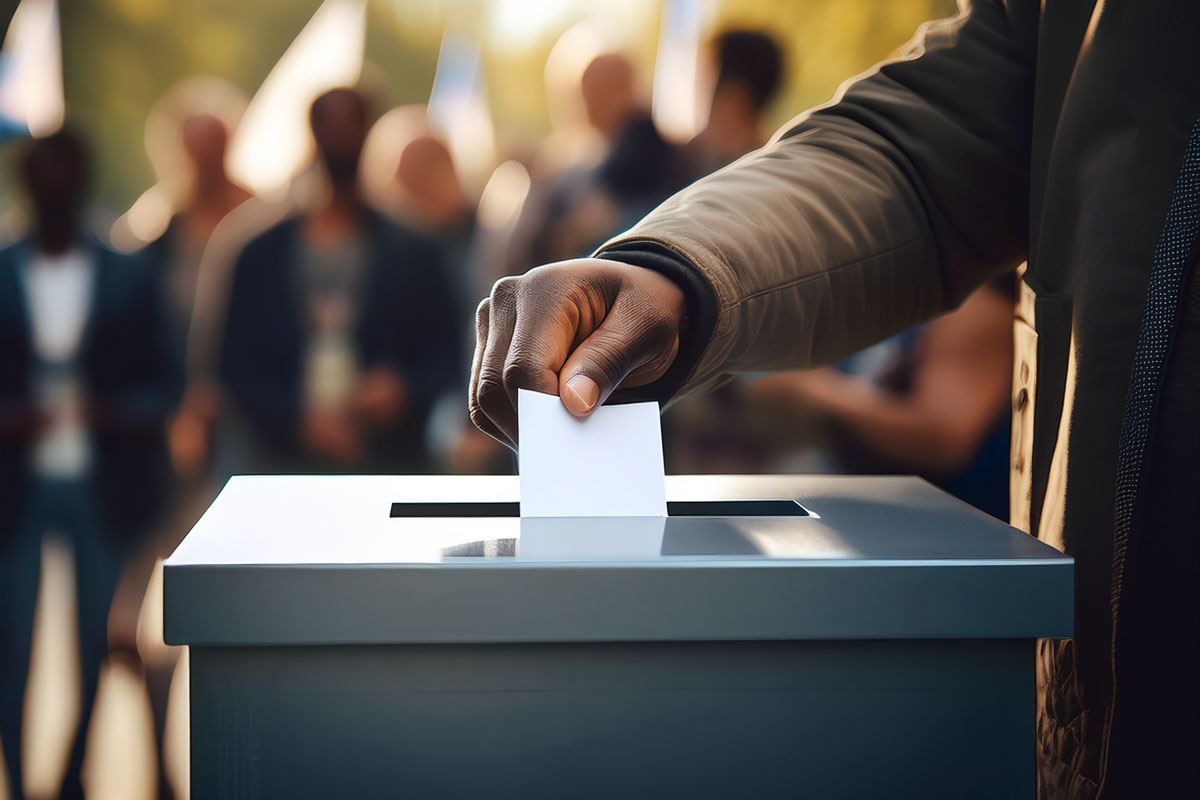
Twenty-one of twenty-three workers we spoke to did not vote in Bangladesh’s twelfth general election on 12 February 2026. Behind that number lies a tangle of technical failures, unreceived letters, missing documents, and something harder to measure — exhaustion, and a creeping sense that it would not matter anyway.
Bangladesh held its national parliamentary election on 12 February 2026. For a country that spent fourteen years under the rule of a single party and, before that, endured periods of military dictatorship, this election carried real weight. Two large political parties contested the polls alongside a number of smaller ones, and for many Bangladeshis — including the tens of thousands working in Singapore — it was the kind of election where the question of who governs next felt like it was genuinely open.
And yet, when TWC2 asked twenty-three Bangladeshi migrant workers whether they had voted, only two said yes. The rest — twenty-one workers — had not. Their reasons, as we heard them one by one, point not to political indifference but to a system that made participation remarkably difficult from here.
The men we spoke with work across Singapore’s construction sector and food and beverage industry. Their time in Singapore ranges from a few years to over a decade. They are the kind of workers who appear in the margins of Singapore’s economy — tunnel electricians, process workers, maintenance hands — and who, when their working day ends, have little left over. To understand why so few voted, it helps to understand the process they were asked to navigate.
A new system, rolled out in December 2025
The Bangladeshi government introduced an overseas voting system for this election, allowing citizens living abroad to cast their ballots without returning home. The process was digital, and it worked roughly as follows.
Workers were required to download a mobile application issued by the Bangladesh government. To register, they had to verify their identity through facial scanning and present their National Registration Identity Document — known as the NRID. Once registered, the Bangladesh High Commission would mail a physical ballot slip to the worker’s declared Singapore address, ten days before polling day. The envelope contained a QR code that the recipient was required to scan using the app, to confirm receipt. On polling day, the worker was to mark the ballot physically, scan the QR code on it using the app, and then mail the ballot back to the Commission.
The app, in principle, tracked each step, displaying a status that told users where they were in the process and what they needed to do next.
Malek
One of the two workers who did vote is a tunnel electrician who has been working in Singapore for thirteen years. He is among the more experienced of the men we spoke with, and the election mattered to him personally.
“Before, we have no chance to choose government,” he tells us, referring to the dictatorship that had ended fourteen years ago. He followed the app-based registration process from the beginning. He and his friends ran into technical problems early on — the application was slow to respond, and verification steps failed without clear explanation. But he persisted. By the time the issues were sorted, some of his friends had already given up. He voted for the party he had backed before. “I vote for them — before I vote same party, not disappointed,” he says.
He is one of the two. Most of the others we spoke with did not reach the finish line.
Rayhan
Rayhan is twenty-six years old and would have liked to vote. He follows Bangladeshi politics closely through Facebook and YouTube, and he is thoughtful about what this election means.
“For many years, one party rules,” he says. “Now many new faces. I not sure what is best choice.” He wanted to participate, but the registration process stopped him.
In December 2025, he and his three roommates tried to register on the app together. Each attempt required a one-time password sent by text message — a standard verification step known as an SMS OTP (One-Time Password). For all four of them, the messages never arrived.
There was a helpline they could have called. He did not. “I think it is too tedious,” he says, with a shrug that is not quite resignation and not quite indifference — more like the considered decision of someone who has learned to pick his battles.
He was not alone. TWC2 understands that the technical problems were widespread across users of the app. On 25 December 2025, it was publicly announced that the issues had been resolved, and workers were given four additional days to complete their registration. But for many, by the time the announcement came, the moment had passed.
Every five years, an election comes. Rayhan knows this. He speaks about the two main parties, the smaller ones, the new faces appearing on campaign materials. He wants to make the right choice. This time, though, he did not get to make any choice at all.
Sajib
Sajib’s obstacle was more fundamental: he does not have a National Registration Identity Document, the NRID required to register for the overseas voting app.
The NRID is Bangladesh’s national identity card. Without it, there is no registration, and without registration, there is no vote. Sajib had simply not obtained one before leaving for Singapore — it did not occur to him that he would ever need it here.
Obtaining an NRID from the Bangladesh High Commission in Singapore costs one hundred dollars. The Bangladesh government did, at some point, offer citizens the opportunity to obtain one for free — but only in Bangladesh. For a worker on a typical migrant wage, flying home solely to collect an identity document so that he can then vote in an election is not a realistic option.
Delowar
Delowar is twenty-nine years old. On a typical day, he works from eight in the morning to ten at night. He did not vote. When we ask why, his first answer is the simplest: there was no time.
But the more he speaks, the more it becomes clear that the issue is not only one of logistics.
“Before got party, but this year favourite don’t appear”
“All not honest, all are cheating”
“Give vote, no vote, no care lah”
He has watched elections come and go. In 2019, he says, he saw how the process played out. He contrasts what he sees in Bangladesh with what he observes in Singapore.
“Last time Bangla and Singapore same same, good leadership change country. Now people very scared. This corruption cannot change. Always giving bribes to get a job. Whole system needs to change.”
He is not saying these things to dismiss the importance of elections. He is saying them because he once believed voting could make a difference, and now he is less sure.
He also raises a practical problem separate from his own situation: some workers living in dormitories did not receive their ballot envelopes at all. The letters from the High Commission were sent to centralised addresses — typically dormitory management offices or common areas — and were then supposed to be distributed to individual recipients. Some of those letters were never passed on. They were somehow lost in the distribution chain.
What this tells us
Twenty-three workers. Two votes. That is not a representative sample, and TWC2 does not claim it to be. But the stories behind those numbers are worth taking seriously.
The Bangladeshi government deserves credit for attempting to give overseas workers a path to political participation. The mobile app-based system, with its QR-coded ballot envelopes and step-by-step status tracking, is not a trivial undertaking. The fact that additional registration time was granted when technical problems emerged shows some responsiveness.
But the gaps are significant. An SMS verification system that fails to deliver one-time passwords to workers’ phones in Singapore is not a minor glitch — it is the barrier between a citizen and his ballot. A document requirement (the NRID) that costs one hundred dollars to obtain from an overseas mission, or alternatively requires a flight home, effectively disenfranchises workers who did not anticipate needing it. A postal delivery system that routes ballot envelopes through centralised dormitory addresses, without a clear last-mile distribution mechanism, will inevitably result in lost letters.
Underneath the logistics, there is also the question of what Delowar describes — the slow erosion of the belief that casting a vote makes any difference. This is harder to fix than an SMS delivery failure. It is the product of years of watching political processes feel closed or corrupt, and it does not respond to a four-day registration extension.
Singapore’s migrant workers already operate at the edge of their available time and energy. A twelve-hour or fourteen-hour working day leaves little room for navigating unfamiliar digital registration systems or tracking down documents from an embassy. If Bangladesh — or any sending country — is serious about extending the franchise to workers abroad, the system must be designed for the conditions those workers actually live in. That means robust technical infrastructure, simpler document pathways, and a distribution mechanism for physical ballots that accounts for the realities of dormitory life. Perhaps, the Singapore government could also consider institutionalising a day-off for migrant workers to fulfil their democratic duties.
Otherwise, the right to vote from afar remains, for most workers, a right in name only.