
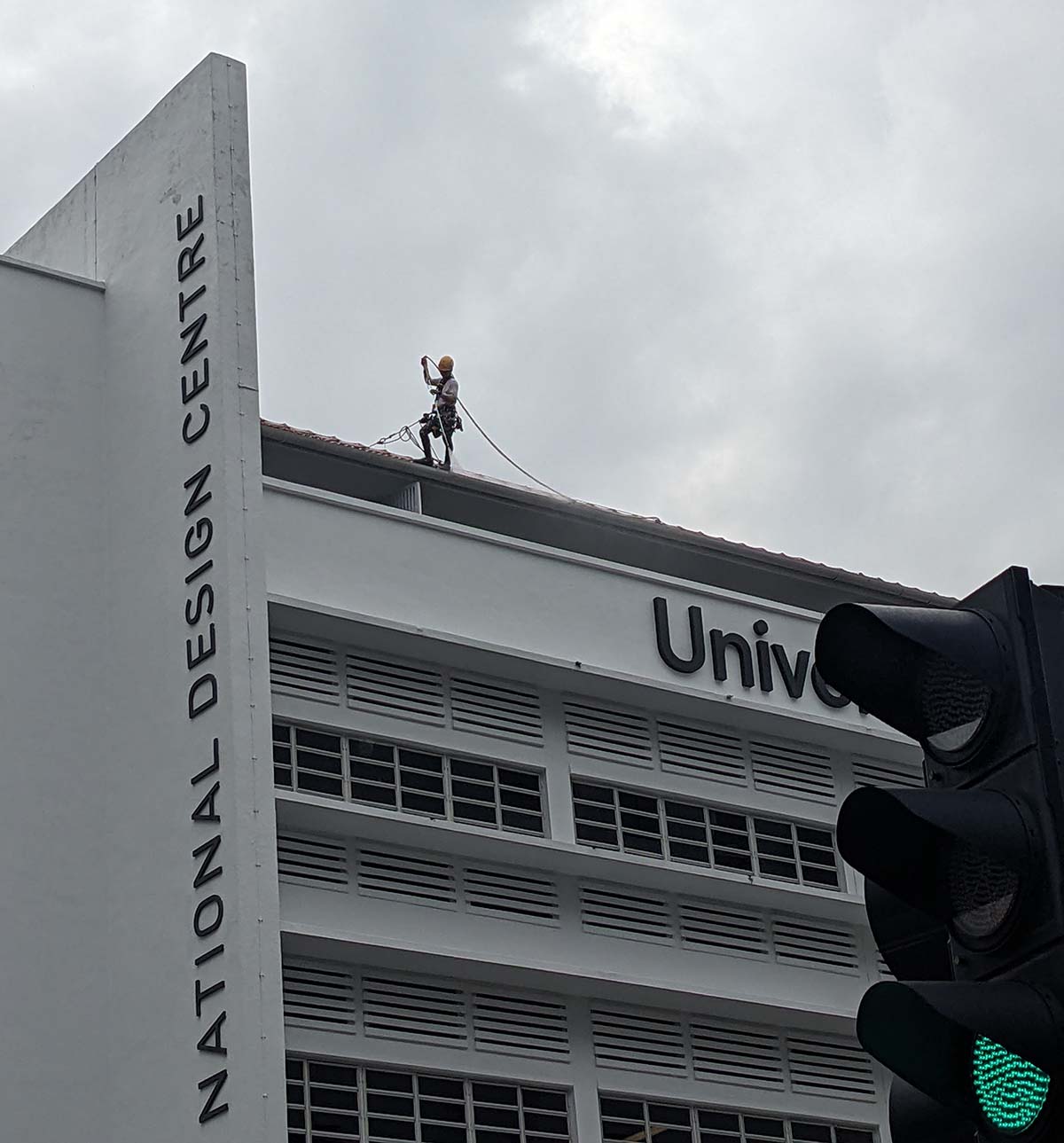
A TWC2 volunteer recounted some troubling observations he made while attending a work-at-height management course. Listening to him, we were troubled too. Work-at-height courses are critical for ensuring safety in industries such as construction, shipbuilding, and maintenance. If foreign workers fail to properly grasp these courses, it can lead to several dangers such as permanent disability or worse death. An inadequate understanding of fall prevention methods and use of safety equipment can lead to falls from height — a leading cause of workplace fatalities in Singapore.
Such scenarios include:
- The misuse of personal protective equipment (PPE), such as harnesses, due to lack of comprehension.
- Workers may bypass safety protocols (e.g., anchoring, use of guardrails) unknowingly.
- Improper inspection or setup of scaffolds, ladders, and mobile platforms can result in collapses or structural failures.
- Errors by one worker (e.g., dropping tools or unsecured materials) can injure others working below.
- In team-based height work, miscommunication or non-compliance by one individual can compromise overall safety.
- Poor grasp of English (language of instruction) or local safety culture can prevent workers from understanding critical instructions or raising safety concerns effectively.
Safety knowledge and job roles pertaining to work-at-height are in three tiers: worker level, supervisor level and manager level. Our volunteer, who was in a manager-level course, noticed that many of the attendees were foreign workers without sufficient grasp of English. They struggled to understand what the lecturer was trying to impart.
Moreover, the responsibilities of a work-at-height manager involve understanding technical drawings, calculations and considerable paperwork. In our volunteer’s view, many attendees would not be up to such duties.
Why did their employers send them to such a course?
We can only speculate. Apparently, when an accident happens, much of the investigation that follows will focus on the measures that have been put in place prior to the incident, and these are the work-at-height manager’s responsibility. If a company had a manager so appointed, much of the blame can be shifted onto him, and away from the company’s overall management. It’s a way to deflect accountability.
That said, these training courses come with an exam, and it cannot be assumed that every attendee will pass. Our volunteer thinks that many will fail. Yet, the course being relatively cheap, companies can send ten workers to take the course, and if one manages to scrape through and pass, one is all the company needs.
Yet, not only is such an attempt to deflect accountability unethical, it is short-sighted. Accidents often halt operations and invite investigations, impacting project timelines and increasing costs through penalties or medical expenses both to the workers and the companies. When choosng whom to send to work-at-height manager courses, companies should take responsibility for sending the right workers who can absorb the knowledge and skills needed for work to proceed safely. Safety should never be compromised by taking the fast and easy way out such as merely going through the motions of adhering to regulations and requirements of work-at-height contracts.