
Articles > Facts, Research, Analysis

Employment of Foreign Manpower Regulations
Section 29 of the Employment of Foreign Manpower Act (EFMA) empowers the Minister (in this case, the Minister of Manpower) to make additional regulations governing the employment of foreign manpower. These additional Regulations have the status of subsidiary legislation (also known as by-laws). That is, they have the force of

Fact sheet: Applicable law for wrongful confinement
TWC2 volunteers often come across cases where migrant workers are seized and detained by private security and repatriation agencies, on orders of their employers, for the purposes of quick repatriation to their home countries. This often occurs when a worker has lodged a complaint against his employer over salary arrears,

Fact sheet: Foreign domestic workers in Singapore (complaints and abuses)
What are the main complaints made by foreign domestic workers? Complaints vary to some extent, according to nationality. A 2005 survey of 115 Indonesian domestic workers who had worked in Singapore found that more than two-thirds complained of limited access to information and communication with other people, not being allowed
Fact sheet: Foreign domestic workers in Singapore (basic statistics)
How many foreign domestic workers are there in Singapore? There were 201,000 female domestic workers in Singapore on Work Permits (end of 2010), as reported by the Ministry of Manpower. That made it about one for every five households in the country. In 2002, there were 140,000. Where do they

Hired on sufferance: China’s migrant workers in Singapore
This is a report published on China Labour Bulletin on February 10, 2011, compiled by Aris Chan. It calls on the Singapore government to abolish its employer-sponsored work visa policy, which gives employers excessive power and control over foreign workers --- Hired on Sufferance: China's migrant workers in Singapore There

Fact sheet: Workmen’s compensation for traffic accidents
The scope of the Workmen's Injury Compensation Act includes death and injury sustained while travelling in employer-provided vehicles, but not in public-transport vehicles. Section 3, subsection 2 of the Act expressly says: 3 (2) An accident happening to an employee while he is, with the express or implied permission of his
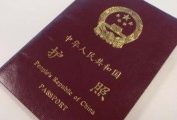
Fact sheet: Retention of passports and important personal documents
It is against the law for employers and agents to retain another person's passport without "reasonable excuse". Passports Act, Section 47, subsection (5) says: 47 (5) If — (a) a person has or retains possession or control in Singapore of a foreign travel document; and (b) the person knows that

Fact sheet: Work permit holders have lowest crime rate of three categories
There is a common idea that migrant workers are responsible for a disproportionate amount of crime in Singapore. When, in 2008, some residents in the Serangoon Gardens area expressed their opposition to a dormitory for migrant workers being set up in the neighbourhood, statements were made that it would be

Foreign domestic workers and their employers generally happy, says MOM from a 2010 survey
Foreign domestic workers (FDW) expressed high levels of satisfaction with working in Singapore, reported the Ministry of Manpower, based on a survey it conducted in 2010. On a scale of 1 to 10, with 10 being 'extremely satisfied', about half of the FDWs indicated that they were "extremely satisfied" with

Fact sheet: Overstaying by more than 90 days can lead to caning
Singapore's Immigration Act specifies that persons overstaying their visas or equivalent permits are liable for judicial caning if they overstay by more than 90 days. There are exceptions pertaining to age. Women are also not caned. Unlawful entry or presence in Singapore 15. — (1) A person shall not remain