
Articles > Facts, Research, Analysis
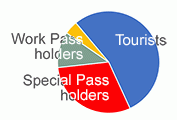
Overstayers’ median period of evading arrest only two months
Work pass and Special pass holders made up about 40% of overstayers arrested in 2018, with tourists forming an even larger number. But they hadn't managed to evade the authorities for long.

What plagues migrant workers?
Dating from 2014, this featured article is a review of the inequalities inherent in the employer-employee relationship with respect to migrant workers in Singapore. Citing cases Meera Rajah came across while volunteering with TWC2, she shows how these imbalances manifest in workers' lived experiences.
Remittance highways and byways
Many low-wage workers from Bangladesh continue to use an informal remittance system to send money back home despite it being an unregulated system. Why do they choose that?

Salary Slip Survey 2018
Although the law says itemised pay slips should be given to employees, 22.5% of foreign workers polled by TWC2 did not get them. Some pay slips were also deficient in detail, falling short of law.

High Court says MOM’s Assistant Commissioner had a “fundamental misunderstanding” of the work injury law
Abu Samad died of a heart attack while at work. He had a history of ischaemic heart disease. MOM's Assistant Commissioner for Labour ruled that his next-of-kin were not entitled to work injury compensation. The High Court overruled it.
Maid to Last? Foreign domestic workers’ access to weekly rest days
In this newly-released study, TWC2 found that domestic workers had to "prove" themselves and learn to negotiate for their days off. Generally, it takes over four years before they can get two rest days per month.
More of here, less of there: Increase in repeat workers and fat profits for the underground job broker in Singapore
In this research study, TWC2 found that about 80% of South Asian workers were "repeat workers", a huge change from a few years ago. We also found that about half of them used a Singapore-based job broker to find a job. Typically, these are foreign workers themselves, not licensed employment agents. It's illicit but profitable.
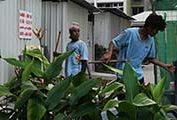
Foreign construction workers continue to reduce, no improvement in productivity
Construction workers tidying up at the end of the day The number of Work Permit holders in the construction industry has gradually declined since a peak in 2015. Last December (2018), there were 280,500 Work Permit holders in this sector, fourteen percent below the 2015 figure of

27% fewer foreign worker claims at ECT in 2018 compared to 2017, why?
On 6 March 2019, Nominated Member of Parliament Anthea Ong asked the Minister of Manpower to supply figures for 2017 and 2018 respectively regarding ... (a) how many salary claims were filed by (i) local employees and (ii) foreign workers at the Employment Claims Tribunal; (b) how many court orders
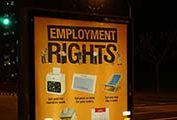
Rights don’t mean squat without accessible avenues of redress
The photo is of an illuminated billboard along Bukit Batok West Avenue 3. It seeks to inform workers of their employment rights, and is sponsored by the Ministry of Manpower (MOM) the Central Provident Fund and TAFEP (Tripartite Alliance for Fair and Progressive Employment Practices). The smaller words in the