
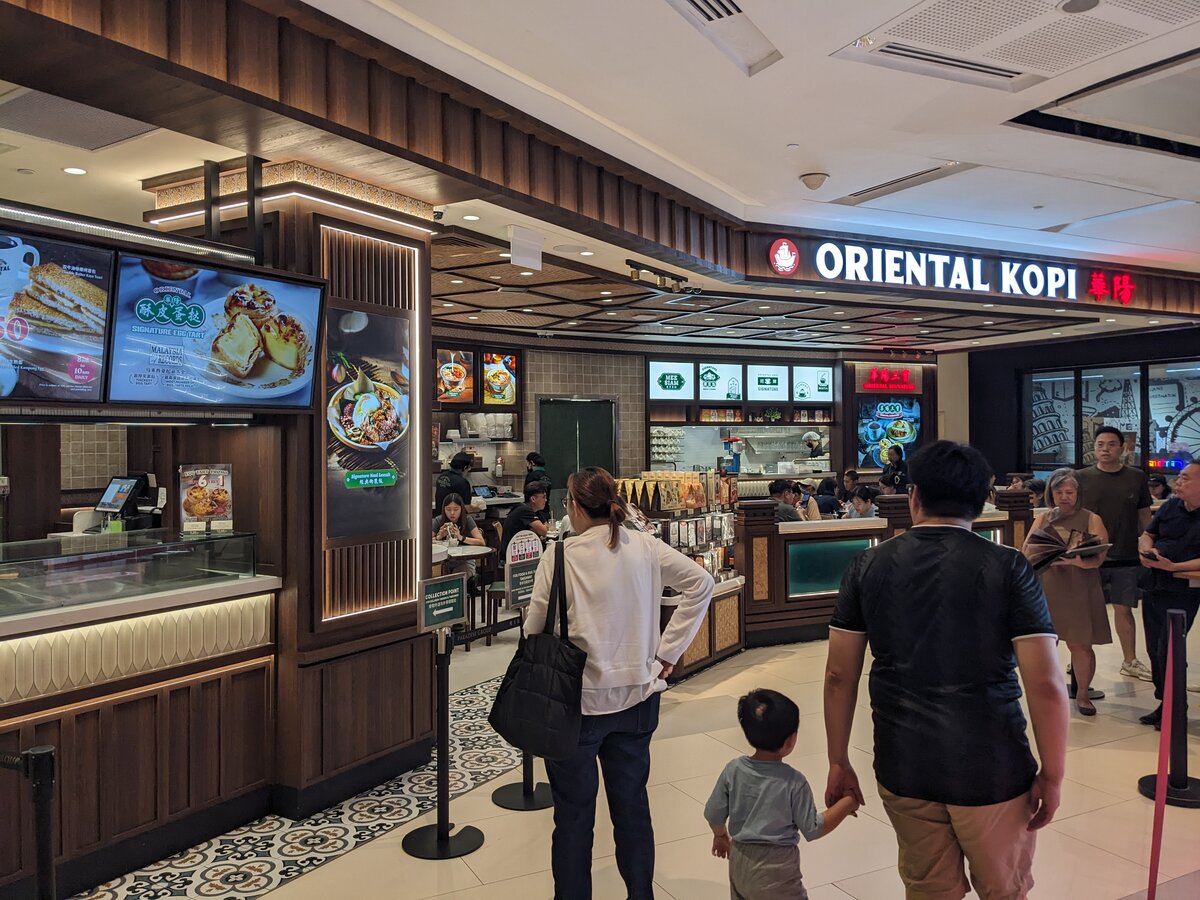
File photo of a popular cafe in Singapore
What Nurul really wants to do is to open a coffee shop back home in Bangladesh. “It will be a good coffee shop”, he tells me, pointing to a restaurant near where we are seated, “with lights and boards like this one”. He estimates this will need at least 3 lakh Bangladeshi Taka, (around $3,150). But saving up for this has not been easy for him. Apart from his wife and three children, he has his mother and a younger brother to support. “Singapore very good working, but … problem”, he says, reflecting on the misfortune that has plagued him throughout his time here.
Nurul first came to the country in 2014 to work as a plumber in a construction company. Only five months into the job, he was hit in the eye by a broken piece of pipe and had to spend a few months in treatment. Not long after, the company itself shut down. They had not paid him any salary during the few months he worked there, and likely also owed him medical leave wages. He returned to Bangladesh and eventually managed to get a partial refund from the recruitment agent who had found him this job, recovering $1,500 of the $3,500 he had originally paid (monetary values converted to approximate Singapore dollars).
When he was hired for his second job in Singapore, in 2019, he was told that he would work in garbage disposal. Instead, he was put to work carrying 50mm rebar at a construction site at Tanah Merah MRT. They would routinely assign just two people to carry weights that should have required four men, he says. Seven months in, carrying such a load, he fell down with the rebar on top of him, injuring his foot and lower back. He again spent a few months in treatment and lost his job, though at least this time he received some compensation for his incapacity.
Nurul started his most recent job in Singapore in 2023, at a company he had heard good things about. It was a reliable employer, he was told, and over twenty five years old (we found that it was, in fact, only incorporated in 2011). However, even in his first few months of working there, salary payments started to get irregular. He was often paid less than the amount stated on his IPA letter (see Glossary), and there were months during which he was not paid at all. He also noticed a number of employees being terminated unexpectedly.
Amid all this, one day in June 2024, he was assigned to do some plastering on a rooftop. A spell of rain had made the surfaces slippery, and he slipped and fell from halfway up a ladder, injuring his wrist and back. The doctor he was taken to told him it was an emergency, and that he should be taken to a hospital. But his employer refused and sent him to his dormitory instead. He was in a lot of pain that night, restless and unable to sleep. His roommates and the dormitory’s security personnel arranged for him to be taken to a hospital.
Compensation offered
After several months of treatment and subsequent medical assessment, in September 2025, Nurul was notified that he was owed a compensation of around $10,500 for permanent incapacity under the Work Injury Compensation Act. A month later, $8,500 was added to this for temporary incapacity, which covers medical leave wages and medical expenses. But Nurul already knew that his chances actually receiving this money were slim. Several months earlier, in January 2025, Nurul had also succeeded in a separate salary claim against his employer, for about $2,700 in unpaid wages. At the conclusion of this claim, however, the TADM mediator had informed him that the company had gone bankrupt. He learnt that over 90 former employees of the company had lost their jobs when it shut down, and many of them were in a similar situation.
He was told to contact the liquidator in charge of the bankruptcy proceedings and given their email address. He tried to do so, but due to his unfamiliarity with email and difficulties in fully comprehending this complicated situation, he was unable to communicate effectively. He did not hear back from the liquidator until a year later, in February 2026, when we contacted them on his behalf. We were told then that they had still not determined whether the creditors of the company would receive anything at all, and that even if they would, it was unclear whether Nurul’s specific claims would be fulfilled.
In the meantime, Nurul has had to live in Singapore while his claims were being processed, for well over a year. Being on a Special Pass, he was not allowed to work. He was provided accommodation by MOM, and food by Migrant Workers’ Centre, but he had no income. “I need one water bottle, how to buy? No money.” Beyond himself, he had a large family in Bangladesh to support. In February 2026, he was caught selling cut fruits in public without a licence, and fined $400. He had to borrow money from a relative working in Malaysia to pay the fine. Consequently, he received a stern warning from MOM against such criminal conduct in the future, and was repatriated to Bangladesh in late March. We last spoke to him the day before his departure.
The big picture
Across his three stints in Singapore, it is unclear whether Nurul has, overall, made any money. Taking into account the recruitment fees he has had to pay for these jobs, his multiple injuries, and the lingering pain, one might reasonably expect him to be bitter and wary of working here. Nurul, however, still has considerable faith in Singapore and wants to come back. He has managed to find another plumbing company that is willing to employ him. He worries, though, that he might not be allowed to work here again because of his record of illegal fruit vending. However this may go, he is at least looking forward to spending some time with his children once he is back home.
Reviewing everything that Nurul has been through in the past two years, there are two things that could have helped him greatly. The first is some nature of support for workers dealing with bankrupt employers. This situation is not rare – as noted earlier, over 90 workers from Nurul’s company lost their jobs when it went bankrupt, and we regularly encounter workers whose companies have shut down only months into their jobs. But bankruptcy proceedings can be quite complicated and opaque, and are conducted in a language that Work Permit holders often do not understand. In Nurul’s case, he would have had a much better grasp on his situation if he was provided some assistance in communicating with his company’s liquidator, and would not have had to wait a year to hear back.
The second is some legal way to obtain regular income. Many of the people on Special Passes for injury and salary claims are capable of doing productive work, but are not allowed to. They are often financially disadvantaged, have people to support back home, are burdened by large debts that they incurred to pay recruitment agents, and may have not been paid their salaries even when they had their jobs. It is only natural for a person who has spent months in these circumstances to be inclined to seek out some form of meagre employment. Under the existing regulations, such employment is illegal and is penalised. As in Nurul’s case, this could drive workers to questionable jobs, and further anguish when they are caught and punished. If, instead, such employment were regulated but allowed, this might benefit all parties involved – the workers get a source of income, prospective employers gain access to a new market of workers who are already in the country, and the government would not have to spend resources investigating these cases.
431