
This picture contains AI elements
From its own survey of employers last year, the Ministry of Manpower (MOM) found that about a third of employers faced difficulty in getting workers with needed skills. The level of frustration probably varies from one industry sector to another, but we at TWC2 have heard the same from companies in the construction and engineering sectors, which employ the largest number of migrant workers here.
A big part of the problem lies in the fact that foreign worker recruitment here is based on a model that is a generation behind the times and is therefore a drag on the industry. As we will describe below, it is structurally not designed to deliver skills; it can only deliver bodies and often these are bodies that have no real aptitude for construction or engineering. The incentives are all wrong.
Like many other sectors, the building and construction industry undergoes constant evolution. Technology is a big driver of change, but this means we need workers with skills that are related to the technology we wish to employ. Where are these skills to come from?
Drones and ultrasound
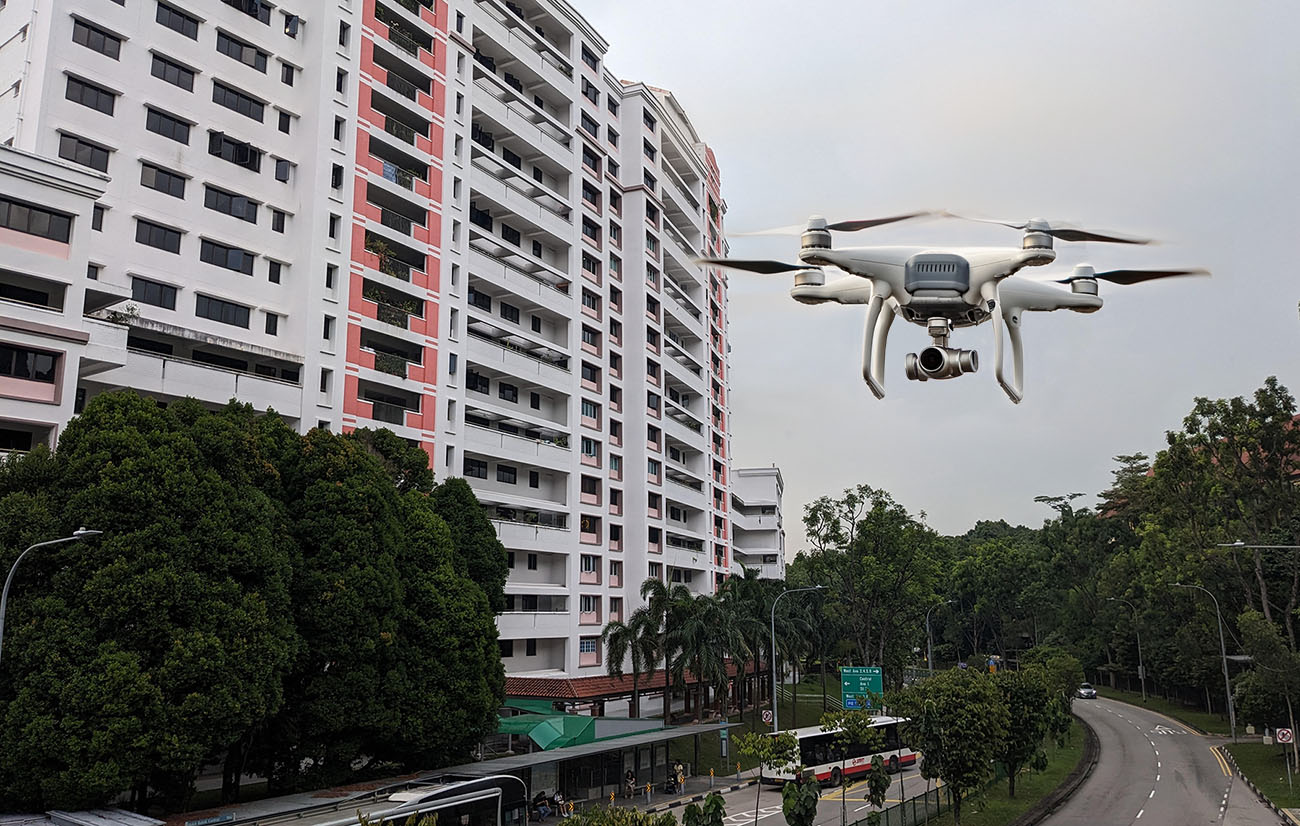
As just one example of how rapidly the industry is changing, this writer recalls a letter from his Town Council informing him that in the coming weeks, drones would be used to inspect the façade of his apartment block for defects. He found from a bit of quick research that building inspection is not only visual, though in this particular case, it might be. Other technologies such as ultrasound can be used to detect defects that are not noticeable from any visual inspection. If Singapore has not yet deployed such technology, it’s only a matter of time. What this means is that a whole new set of skills – drone operation and learning to read the scans produced – would come into play.
For now, any needed repairs would still need a human being clinging on to the side of a building 25 floors up, and that means someone with rope access or gondola operation skills, though these too are skills that men need to be trained for. However, the day may not be far when there are robots that can crawl up the sides of buildings to do the repair work, and somebody needs to be able to operate them.
Without getting too fanciful, the point is that the demand for skills is not only ever-present, it is ever-changing, even in an industry that is as age-old as construction. But who is responsible for training the workers? And where?
Recruiting bodies, not skills
By and large, the present recruitment model is one that brings in workers with virtually no construction skills. The Building and Construction Authority has a requirement that all migrant workers in construction must possess at least a “basic skill” SEC(K) certificate, but in our opinion, employers do not place much value on this certificate. As far back as 2014, we reported as much in our article Half of construction workers were deployed outside their skill areas. We found that employers hired workers trained in one trade to do work in a different trade (for which the worker had received no training), which meant that for all practical purposes, many workers doing construction in Singapore were used as unskilled labour. The men were just being hired for their bodies. The situation has not changed in the decade since we published that report.
How sustainable is such a recruitment model when the demand will keep growing for technical skills that support the rapid adoption of technology?
Based on TWC2’s experience with thousands of workers in the construction and engineering industries, recruitment is typically done through intermediaries who have no employment agency licence. Since they already operate outside the law, they don’t need to abide by any rules regarding fees; they charge whatever the market can bear. For a first-time worker from Bangladesh, a recruitment fee of $10,000 to $14,000 is the going rate – for jobs that pay a basic salary of $5,000 a year.
It is hardly any wonder that recruiters are motivated to preferentially hire those prospective workers who can pay. Skills and aptitude are way down the list of priorities. Among Bangladeshi and Indian migrant workers coming into Singapore’s construction sector, prior experience is virtually unheard of.
Moreover, with so much collected through recruitment fees, it has become common knowledge that a part of the fee is sometimes shared with employers. These employers, usually subcontractors, are likewise incentivised to hire on the basis of money, not on the basis of skills, leaving main contractors frustrated.
There are broader effects on the entire industry. Even if a contractor wished to be more ethical and hire on the basis of skills, or sponsor his employees for training, he would be constrained by the competition. His competitors (other contractors with lower labour cost and a “subsidy” from kickbacks) will have a huge advantage in bidding for contracts, leaving the more ethical employer with little wiggle room to hire on the basis of skills and experience, since these workers might expect to be paid better, or sponsored training costs money. Reality? The whole industry is effectively engaged in a race to the bottom.
Moreover, there is the question of where potential workers can find the needed training. Surely it is not realistic to expect the less-developed countries of origin to be providing skills training related to the technologies that Singapore uses. Moreover, in some trades, e.g. rope access, a Singapore certification is needed.
A new model
Singapore needs a whole new model for migrant worker recruitment, one which involves taking responsibility for ensuring that they are trained to the standards we need. Additionally, there should be additional pathways for further training as they progress in their careers. Equally important, whatever new model we adopt should be one that is obligatory on all employers, otherwise the present situation where unethical recruiters and employers undercut the ethical ones will persist.
Our proposed concept is as follows:
- Repurpose the currently barely-used Training Work Permit to be the primary entry-level work pass for lower-skill jobs, and extend the period of a Training Work Permit to one or two years from the present maximum of three months.
- For new-to-Singapore workers, employers should hire on a Training Work Permit, with an undertaking to sponsor (and pay for) a training course in Singapore.
- Trainees work as apprentices but also get appropriate days off to attend training at accreditted centres. Understandably, salary levels for trainees may be no different from the low salaries currently prevailing in Singapore for first-time workers.
- Review and beef up all training courses to ensure that they impart real skills that contribute to productivity. Present SEC(K) training courses that need only three or four weekends are not confidence-inspiring.
- When the worker successfully completes the course, the worker is upgraded to the normal Work Permit with two years’ duration, and renewable.
Parallel to this, Singapore needs to invest significantly in training infrastructure. Furthermore, to ensure that trained workers are incentivised to remain in Singapore to contribute to our economy, we need some kind of Progressive Wage Model for migrant workers, even if the wage targets are less ambitious than those for citizen employees.
As always, there will be a fear of costs. Costs however, should never be seen in isolation, and are often justified by improved productivity. Singapore talks a lot about productivity, but talk without systemic change is fruitless. Achieving better productivity requires better skills, not just among a few migrant workers, but among many. We need an overhaul of the entire recruiting and training ecology to support this.