
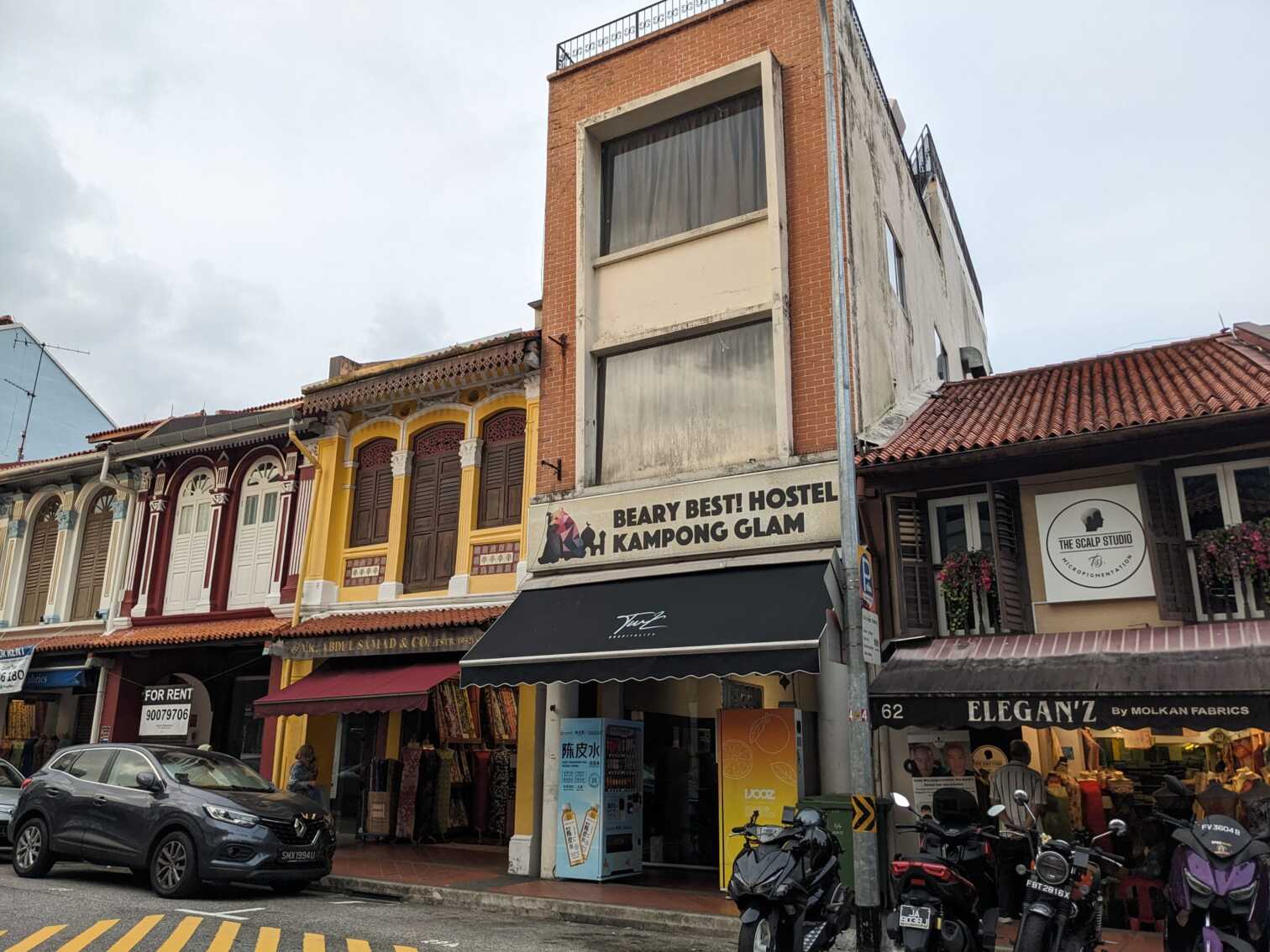
One of the many hotels the employer put the workers in
In early August 2026, three workers from an airconditioning company came to TWC2 twice within a span of five days. We will call them Varai (from India), Hirut and Zum (these two from Bangladesh). The first time they came, it was about their salary claim. They had gone to the Ministry of Manpower earlier to file their claims but they needed to consult with us as to how to take their claims further.
These three were relatively experienced workers. Hirut, for example, had first come to Singapore to work in 2012. He was now 41 years old. Varai was 32 and Zum 37.
After the weekend, they came back to see us even though nothing much was happening with their salary claims; it had just been a few days since we last spoke.
“So, what’s the problem today?” we asked.
“Very urgent problem,” Varai began. “The landlord came this morning and said we have to leave.” Apparently, the boss had not paid the month’s rent. “And we cannot contact boss,” Hirut added, “maybe he block us.”
The men had been housed in a walk-up apartment in the Geylang area, unlike most construction workers who are usually housed in large purpose-built dormitories.
The men packed their bags and asked the landlord if they could leave their bags there till they find alternative accommodation. The landlord agreed. They then walked four and a half kilometres to TWC2.
“You walked here from Geylang?” we weren’t sure we heard right.
“We no money,” all three said almost in unison. “Boss not pay salary.”
Not acceptable to MOM either
Throwing workers out onto the street is not acceptable. In fact it was one of the factors that energised the early volunteers of TWC2 way back in 2008 when they encountered dozens of men sleeping rough in the Little India area. Their employers had gone out of business and they simply shooed their workers out from their lodgings. Without money, they could not afford meals either. TWC2 had to step in and help, setting up our Cuff Road Project – providing free meals for unemployed migrant workers – a programme which continues to this day.
Over the years since, we have engaged the Ministry of Manpower over this issue and we know that they too view such employer behaviour as a serious transgression. They have tightened the rules and we know from recent cases that they have systems in place to respond to workers’ cries for help. They don’t always act as quickly or as firmly as we would like to see, but the issue is not ignored.
Our advice to Varai, Hirut and Zum was to go back to their Geylang house, pick up their bags and make their way the same afternoon to the Ministry of Manpower. We organised a hire car from Grab so that they wouldn’t have to walk another four and a half kilometres. We gave them some extra money so they could top up their farecards and not have to walk long distances again over the next few weeks.
Our donors would be pleased that their donations make a real difference to workers like them.
At the same time, TWC2 sent an email to MOM giving them advance notice that the men would be there soon and that action would be needed before nightfall since the three guys had nowhere else to go. In the meantime, we made contingency preparations to house them in our emergency shelter should MOM have difficulty getting hold of the employer in time. (Thank you, donors, for helping us sustain an emergency shelter).
Through the afternoon, the men kept a line open with us as they waited at MOM for a solution. By about 18:00, they reported that MOM had managed to reach the employer and instructed him to provide accommodation. They were later directed to a hotel in the Jalan Besar area.
All through August
Over the next few weeks, the men stayed in touch with TWC2 as their salary cases progressed. However it wasn’t until the start of September that we got a chance to ask them how they had been housed through August.
“Until now, we stay hotel,” said Hirut.
“Not same hotel,” clarified Zum.
They had been moved from one hotel to another every two, three or four days. “When we have to move, we have to check out at ten o’clock,” explained Zum, “and then jalan-jalan for six or seven hours until boss give us new hotel name.” By ‘jalan-jalan’ they mean loiter in public places.
Hirut said their most recent hotel was Beary Best in the Kampong Glam area, “but it not really hotel.”
“Then what is it?” we asked.
“Not have room, but have pod capsule,” he clarified.
He then showed us a booking form which the boss had forwarded to them so they could check in. We saw a price amount on the form – about 15,000 Indian rupees for three men for two nights. That’s about $210, or about $35 per man per night.
We do a quick calculation. Assuming that the boss was paying roughly the same rate whichever hostel he sent them to over the past few weeks,
One month (30 days) x 3 men x $35 = $3,150.
He would have spent about $3,000 to house them.
“Boss say he no money to pay us salary,” noted Zum with irony in his voice, “but have money pay hotel.”
Actually, we’re not a hundred percent sure that’s the case. Have the hostels been paid? We couldn’t help but wonder.
Salary claim settled at two-thirds
The main reason they came to TWC2 this time (September) was to tell us that they had reached a settlement with their employer through mediation at TADM. TADM stands for Tripartite Alliance for Dispute Management, a unit located within MOM that handles salary claims. In the latest mediation session with their employer, each man had agreed to settle at two-thirds of their owed amount (we have the exact numbers in our case files), which meant they each had to write off between $1,500 and $2000.
Hirut had found a new job too and would be starting within a day or two. Varai was attending a job interview the same day and we wished him success. Only Zum had no good news to report (yet). Now that he had settled the case, he might be running out of time and might have to go home.
Like so many stories we hear from migrant workers, this one is not one of unalloyed good news. TADM will brag about a 100% success rate in helping these three workers get their owed salary, though this post here records the detail that they’ve had to settle for one-third less. To us and, more importantly, to them, it is not 100%.
But at least, the case was over within about a month; relatively quick compared to other workers’ travails. Perhaps the prospect of paying for hotel stays indefinitely should the case drag out helped focus the employer’s mind.

In early November 2026, about three months after we first saw these three men, we did a wellbeing check with them again. They told us that they had received from the old employer what they had settled their claims for. The employer paid up. All three were now in new jobs as well. We are glad for them.
18230, 18229, 1872