
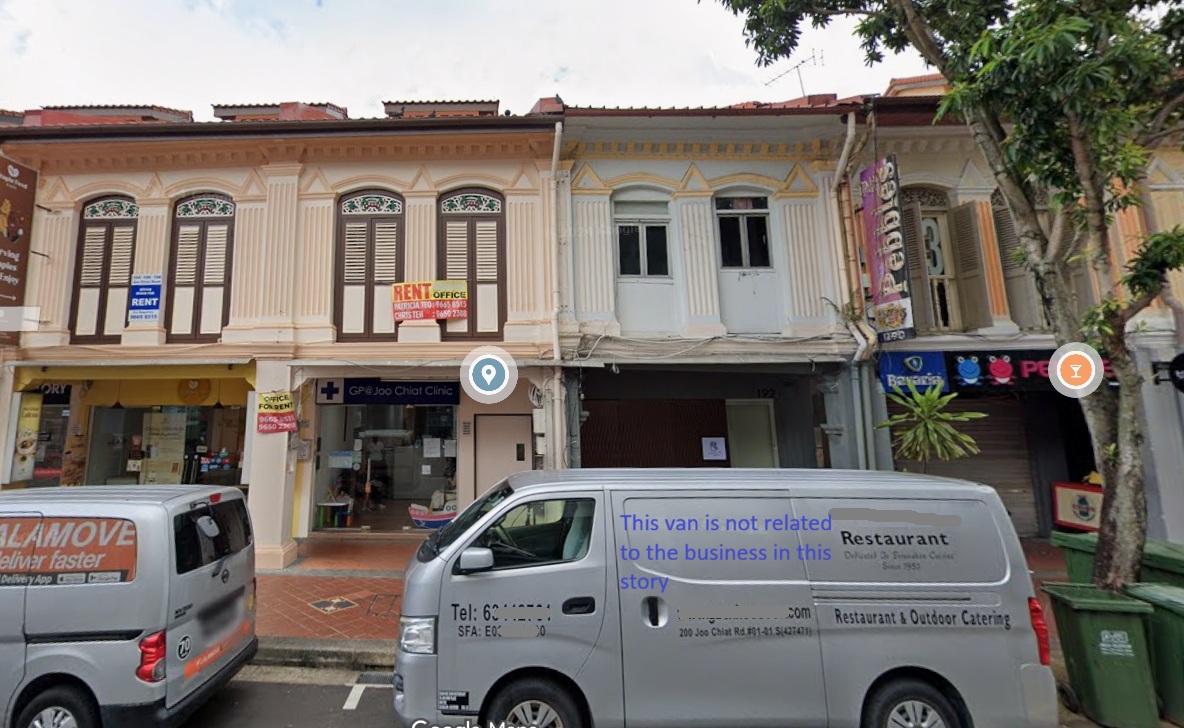
Screenshot from Google Streetview. The workers were housed in the white upper-storey unit in this row of shophouses.
After nightfall on Sunday, 15 March 2026, boss Palani and driver Karthik pulled up at a shophouse on Joo Chiat Road. Sixteen employees of Palani’s company were housed in the upstairs room of this house. Fourteen of the sixteen were Bangladeshi and two Indian. For over a year that they were housed there, all of them had to make do with just one toilet, which raises questions as to whether housing so many at this address was a violation – but that would prove to be the least of their problems tonight.
Palani and Karthik marched upstairs and demanded the mobile phones from all fourteen Bangladeshi workers. They also demanded the passwords to unlock their phones, threatening them with Work Permit cancellations and immediate repatriation if they did not comply. One by one, the men handed over their phones together with scraps of paper with passwords scribbled on them.
Then the boss put new locks onto the front door and locked everyone inside. The two Tamil employees were given the passcode to the locks, but sternly told not to share the code with the Bangladeshi workers. Palani and Karthik then left, the men’s phones still in their possession.
Locked up for two days
For nearly two days, the men were locked inside, with no food, and no way to call for help.
“We only eat biscuit,” their spokesman tells TWC2. “Food no have.”
Although the two Tamil workers could come and go, they seemed uninclined to assist their Bangladeshi co-workers, probably because they too did not want to antagonise their boss and suffer the same fate.
Locking people inside an enclosed space is an offence: wrongful confinement. Taking away their phones under threat is likely one of these: robbery, extortion, or criminal intimidation. TWC2 advised the workers to make police reports.
On Tuesday, their phones were returned, but to their shock, the men found that all the devices had been reset. All information they had, including phone numbers of family members, had been wiped clean. Equally critical was the loss of the photos that they had of their time cards. They knew these were key to proving the number of overtime hours they had worked, and now this information was gone.
The next day, they went off to lodge a complaint at the Ministry of Manpower (MOM), in the course of which, nine men (possibly ten – the spokesman wasn’t too sure of this) found that their Work Permits had been cancelled.
Of the fourteen Bangladeshi workers, four men still had live permits and they went back to work. Coincidentally or not, these four were the newest arrivals to join the company. One man (the tenth man) was soon repatriated. The nine remaining men would not be so easily intimidated and filed salary claims. The Ministry of Manpower (MOM) put them on Special Passes and once that happened, the boss would not be allowed to repatriate them.
Not paid for months
For many months, the men had not been properly paid their salaries. They had received a couple of hundred dollars every now and then, enough to buy food, but that was all. Because they all had bank accounts, it was easy to show that salaries had not been paid. However, with photos of their time cards deleted by the boss, they could no longer prove that they had also worked overtime, or calculate exactly how many overtime hours they had put in.
Without their timecards, any attempt by these workers to claim for unpaid overtime would possibly founder for lack of evidence. The boss’ act of taking and resetting their phones was perhaps intended to achieve exactly this result, which only shows how serious the matter was.
Nevertheless, TWC2 will assist the nine workers as well as we can with their salary claims. As a first step, we reported to the Ministry of Manpower (MOM) the confinement and the thuggish deletion of data and images from their phone. The reply was rather weak. MOM said that they had informed the employer that confinement was impermissible – but surely any normal person would know that already, so how is that going to deter the employer from doing it again? As for the deletion of data and images, the very issue that may undermine the workers’ right to overtime pay, we have no information what action, if anything, MOM is taking.
Do the authorities treat such bullying by employers seriously enough?
17729, 17730, 17731